We've moved! The Art in Science has a new home at taiscience.com

Tuesday, 30 November 2010

Sound sculptures


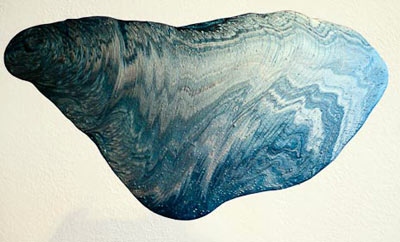
The creative studio Dentsu, teamed up with photographer Linden Gledhill (a biochemist turned photographer!) to create this series of paint sculptures using sound vibrations. The series was part of a campaign for canon’s pixma ink printer brand. One of the coolest things I've seen a while.


Canon Pixma: Bringing colour to life from Dentsu London on Vimeo.

Saturday, 27 November 2010

Underwater army

Lurking underwater off the sandy shores of Cancun is a 400-strong army of cement sculptures, the largest submerged museum in the world.  Sculptor Jason de Caires Taylor designed this submarine attraction for the MUSA (Museo Subacuático de Arte) in Cancun to highlight natural ecological processes and explore the relationships that exist between art and the environment.


Each of the sculptures is made from 'specialised materials' (sorry that's the most detailed information I could get from the google-translated Spanish press release!) that promote coral life which will lead to an artificial reef.  This will attract marine life whilst offering the viewer privileged temporal encounters governed by the growing coral and shifting sand; the work changing from moment to moment.


The equivalent installation on land would provide a quite different optical and physical experience due to the dramatic difference in the number of angles and perspectives available and due to the unique properties of water. Jason de Caires Taylor describes the experience as being

'Vastly different from that of being on land. Objects appear twenty five percent larger underwater, and as a consequence they also appear closer. Colours alter as light is absorbed and reflected at different rates, with the depth of the water affecting this further. The light source in water is from the surface, this produces kaleidoscopic effects governed by water movement, currents and turbulence.'


The installation weighs over 180 tonnes in total and occupies an area of over 420 square metres of barren sea bed. In time, marine life will grow and develop and, with it, the sculpture will evolve and come to life. It will be interesting to look back at these sculptures in a few months time as I imagine they will look dramatically different and infinitely more beautiful. 
Below is a little glimpse into the future; a photo from one of Taylor’s past projects that has had time to engage with its new environment.


Tuesday, 16 November 2010

A view from the outside

@Astro_wheels is his name and tweeting from space is his game!

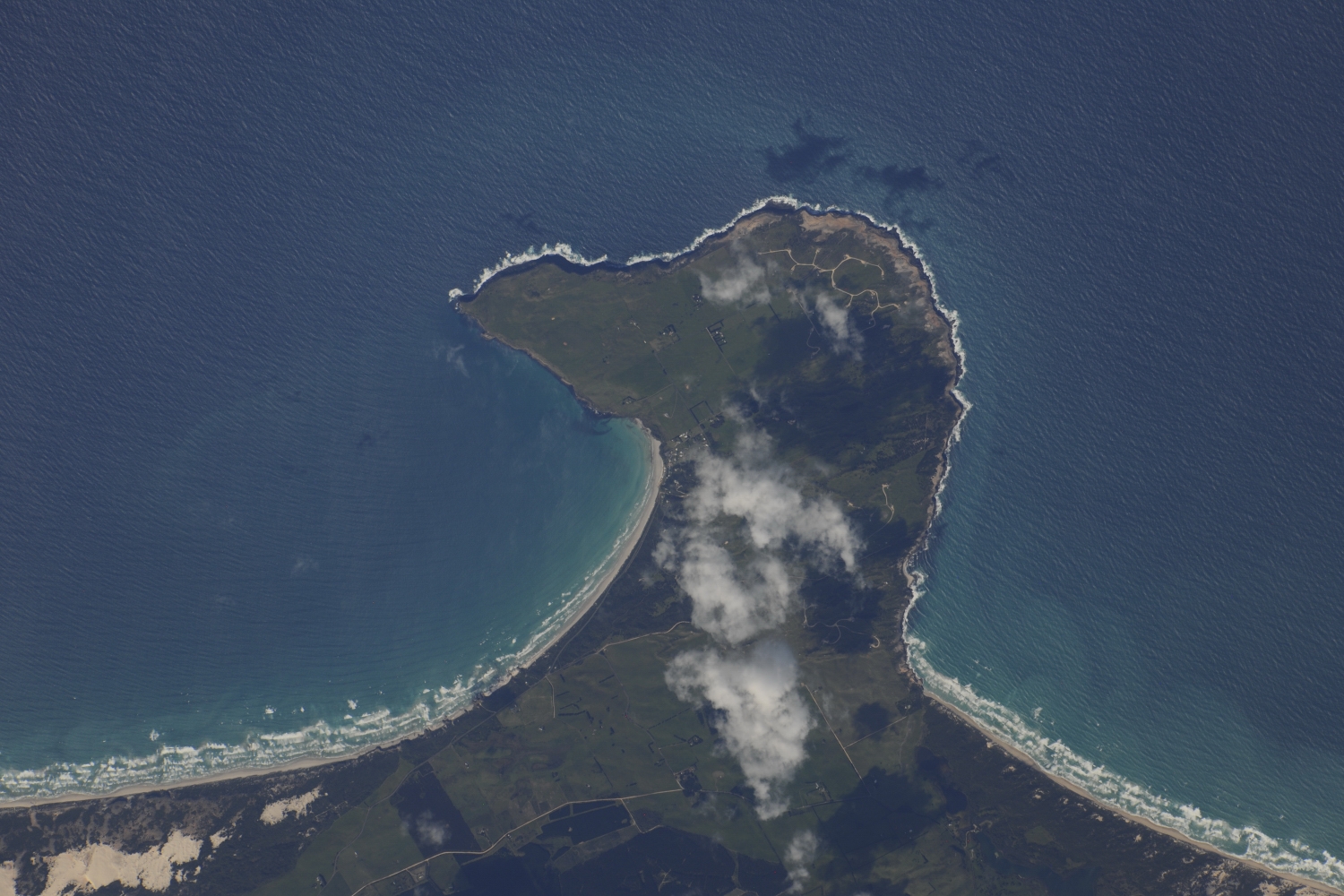
Flight Engineer Douglas H. Wheelcock has spent the last six months of his NASA journey 'tweet'ing pictures of the earth from space.  His Twitter ID is @Astro_wheels and with over 53,000 followers, his pictures are viewed around the globe.  Ironic really.  He often posts pictures of obscure locations or stunning views and his dedicated following guess which part of the world he has been looking at!

Below are a few of his recent tweets but check him out for yourself.

Doug Wheelock tweets pictures of the earth from an orbiting laboratory in space every day, what do you do?


Monday, 8 November 2010

Microwaving CDs...don't try this at home!

I have added procrastination to the list of skills I've mastered and, in a bid to impart this wisdom to my faithful readers, I am going to share with you what I've been doing this cold and drizzly Monday evening.

Today's post is about microwaving CDs but please, please, please do not try this at home (or do, but absolutely, definitely DO NOT hold me responsible. Not even a little bit.  Nada)

When you put a CD in the microwave for a few seconds (this is not a recipe...but no more than three seconds) the aluminium concentric circles are vaporised and you are left with this nifty little piece of art (right).

If you were to put a CD in the microwave, you would make sure that it was stood up against a glass and that you stopped the microwave when the CD started smoking.  Of course you know those fumes are very dangerous and shouldn't be inhaled.  But you won't try this at home so it doesn't matter.

The few seconds of arcs being created around the CD makes for a miniature electrical storm sparking away in your microwave (or your neighbours' if your flatmates are odd and don't own one).

You can watch this video at Powerlabs showing you what it looks like since you aren't going to do this at home.

When the little lightning party ends, one must be careful not to touch the CD right away (not You, no one's accusing You).  The CD can still be conducting currents for a few seconds after microwaves are present.

'How the heck does it work?', you may be wondering. Well, the thin layer of aliminium is vaporised by the microwaves and this vapour supports the flow of electricity.  With me so far?  Okay, well arcs form (like those from clouds to the ground - lightning), which continue to vaporise a trail along the circular tracks where data is stored.  This happens until the space between the tracks becomes too great to support an arc.  

...and what you are left with is seen below.  This is not one I did, my attempt (in safe laboratory conditions with all safety precautions taken) was pretty special but I couldn't get a decent photograph with my camera!


 Arianna Gianola, Princeton University gave it a good shot

So, the moral of the story is; if you're bored and have CDs from the 80s kicking around the house don't put them in the microwave*.  

*Unless you have a very well ventilated room, only put it in for 3 seconds, don't mind the prospect of your microwave exploding, wait very patiently once it's finished and take amazing pictures to share with me afterwards.  Then and ONLY THEN may you try this at home


Sunday, 24 October 2010

This is NOT just photography

The Wired Science blog  is undoubtedly one of the best science blogs on the net, being accessible for the laymen but diverse and in-depth enough to keep all interest-levels happy. Last week, however, one post stood out among the rest. The announcement of the top 20 microscopic photographs in the 36th annual Nikon Small World competition.


The 20 photos that popped up on my screen were unrecognisable at first glance and unbelievable upon closer inspection.  These photo's are truly phenomenal!  Take a look at the winner:


'Can you guess what it is yet?' (in my best aussie accent).  No?  Well it's the heart of a mosquito, magnified 100 times!  Betsy Mason at WIRED said that
'The image, which used flourescence technology to highlight different parts of the specimen, stood out as one of the most beautiful of the entries. And it also had scientific merit as part of the photographer’s research on how mosquitoes carry and spread disease.'
Below is a pick of my personal favourites but you can take a look for yourself at the Wired Science blog.
Ichneumon wasp compound eye and antenna base (40X), Reflected (Episcopic) Light Illumination 
Telophase HeLa (cancer) cells expressing Aurora B-EGFP (green) (100X)
Zebra Fish olfactory bulbs (250x)
Ctenocephalides canis (flea) (20X)
...and if you can't get enough of photomicrography, you can visit the Nikon Small World website.

All images courtesy of Nikon Small World

Tuesday, 19 October 2010

The Painter and the Pendulum

Tom Shannon is an extremely talented and creative painter and scientist.  His work, based around the magnetic and gravitonal fields, centrufugal force and fluid dynamics of the universe demostrate the forces and fields acting on the Earth and the Sun.  I will leave the explanation to Tom, but enjoy this video and listen carefully to Tom's musings on the universe and nature, he's a smart man.

Tuesday, 12 October 2010

Size Does Matter

Now that I’ve got your attention, have you ever stopped to think about the importance of our perception of scale? No, me neither. Until now. I mean, at one end of the ‘scale’ we have incomprehensibly small particles making up the entire universe and at the other, distances measured in the equally mind-boggling lightyears*, millions of which it would take to even dip your toes in that pool of matter.

*If, like me, your year 5 physics is jumbled up in your head somewhere between mottle and daub medieval huts and the formation of an oxbow lake, let me remind you; A lightyear is the distance that light can travel in a year!).

Yet, visually, on a day-to-day basis we all perceive the world on the same scale, or so it seems. The Measure for Measure art exhibition at Gallery 825 Los Angeles, explores the ability of art to experience and perceive the size and scale of what we see.

Whilst oscillating strings vibrating to create the universe (see my previous poem: String Theory) is difficult to conceive, the art in Measure for Measure makes tangible the conceptually dramatic boundaries that we meet in science.

Lisa Randall, curator, explains ‘I wanted a theme where both art and science could participate and it wasn't just art representing science or science pretending to be art, but where we could think deeply about ideas that underlie both of them’

The exhibit consists of work from seven artisits and includes painting, sculpture, images, installations and videos. Prominent in many of the installations were mirrors, their reflections creating swollen and shrunken worlds-within-worlds.

Unfortunately, for my predominantly-English audience, the exhibition was in Los Angeles, however, you can peruse the following pictures form the exhibit and read more about the exhibit at the Measure for Measure website.

Image: Anita Bartlett  Susan Sironi's 'Actual Size' - A Portrait in Four Parts
Sironi took illustrated classics like 'Gulliver's Travels' and 'Through the Looking Glass', then carving to-scale tracings of her body parts into them using a surgical scalpel.
'Measurements of Space in a Fractal Structured Vacuum', Artist Felicity Nove 'created paint pours reminiscent of supernova explosions and black holes on the Hubble website'.


'Meeson Pae Yang's Structures installation explores diatoms, groups of algae that make up a large component of the earth's biota.'


Images copyright of Los Angeles Art Association.  For details of all images sources and references please contact me directly.