Philip Zimbardo visualises hedonism, time perspective and pace of life in this superb animated guide to 'The Secret Powers of Time'

Sunday, 26 December 2010

Wednesday, 22 December 2010
The smallest periodic table ever in the World ever?
I have seen myriad videos of images being basically printed onto strands of human hair; university logos, names, shapes...but this one takes the biscuit. The University of Nottingham gave Professor Martyn Poliakoff a birthday treat by 'printing' the periodic table onto one of his hairs.
The printing is done by radiating the hair with ions of gallium which flake away teeny weeny bits of the hair at a time. The resulting periodic table is 86 microns long (you could fit a million of them onto a square the size of your palm) and whilst this little trick is itself ultimately useless it does demonstrate the awesome (in it's richest and less colloquial sense) capabilities of nanotechnology.
See for yourself. I mean, aside from the lovely chap's odd-yet-endearing nutty professor appearance and poor televisual suitability, there is some pretty cool technology on show.
Tuesday, 14 December 2010
Facebook: mapping earth
There are six degrees of separation, so they say, and the world is an intricate web of mothers, husbands, colleagues, cousins, friends, enemies, frenemies. But this we're-all-the-earth's-children hippy talk of all being 'connected' is turned on it's tie-dye bandana-adorned head when searching through facebook and finding the right name, a similar face (but the picture's so small, I'm just. not. sure.) and to top it off, no mutual friends.
That is, until now. You may not feel connected to the rest of the world through your photo tags and wall posts and stalking the guy that you're inconveniently in love with, but an intern at Facebook has spent an undisclosed (obscenely large) amount of time poring over data to create this map of the world through Facebook's eyes, forcing you to admit that actually, we are a pretty snug-as-a-bug-in-a-rug close knit family unit.
Each line connects cities with pairs of friends, with brighter lines sprouting from the cities with the most pairs of friends.
Paul said of his digital creation:
That is, until now. You may not feel connected to the rest of the world through your photo tags and wall posts and stalking the guy that you're inconveniently in love with, but an intern at Facebook has spent an undisclosed (obscenely large) amount of time poring over data to create this map of the world through Facebook's eyes, forcing you to admit that actually, we are a pretty snug-as-a-bug-in-a-rug close knit family unit.
 |
| by Paul Butler (intern), crucial cog in the Facebook machine |
Each line connects cities with pairs of friends, with brighter lines sprouting from the cities with the most pairs of friends.
Paul said of his digital creation:
"Not only were continents visible, certain international borders were apparent as well. [...] What really struck me, though, was knowing that the lines didn't represent coasts or rivers or political borders, but real human relationships."You'll notice that large chunks of the Earth appear to be missing, such as China and most of rural Africa, and this is because Facebook hasn't quite permeated into the pores of their very existence yet...but give it time.
Tuesday, 30 November 2010
Sound sculptures

The creative studio Dentsu, teamed up with photographer Linden Gledhill (a biochemist turned photographer!) to create this series of paint sculptures using sound vibrations. The series was part of a campaign for canon’s pixma ink printer brand. One of the coolest things I've seen a while.
Canon Pixma: Bringing colour to life from Dentsu London on Vimeo.
Saturday, 27 November 2010
Underwater army
Lurking underwater off the sandy shores of Cancun is a 400-strong army of cement sculptures, the largest submerged museum in the world. Sculptor Jason de Caires Taylor designed this submarine attraction for the MUSA (Museo Subacuático de Arte) in Cancun to highlight natural ecological processes and explore the relationships that exist between art and the environment.

Each of the sculptures is made from 'specialised materials' (sorry that's the most detailed information I could get from the google-translated Spanish press release!) that promote coral life which will lead to an artificial reef. This will attract marine life whilst offering the viewer privileged temporal encounters governed by the growing coral and shifting sand; the work changing from moment to moment.


The equivalent installation on land would provide a quite different optical and physical experience due to the dramatic difference in the number of angles and perspectives available and due to the unique properties of water. Jason de Caires Taylor describes the experience as being
'Vastly different from that of being on land. Objects appear twenty five percent larger underwater, and as a consequence they also appear closer. Colours alter as light is absorbed and reflected at different rates, with the depth of the water affecting this further. The light source in water is from the surface, this produces kaleidoscopic effects governed by water movement, currents and turbulence.'


The installation weighs over 180 tonnes in total and occupies an area of over 420 square metres of barren sea bed. In time, marine life will grow and develop and, with it, the sculpture will evolve and come to life. It will be interesting to look back at these sculptures in a few months time as I imagine they will look dramatically different and infinitely more beautiful.
Below is a little glimpse into the future; a photo from one of Taylor’s past projects that has had time to engage with its new environment.

Tuesday, 16 November 2010
A view from the outside
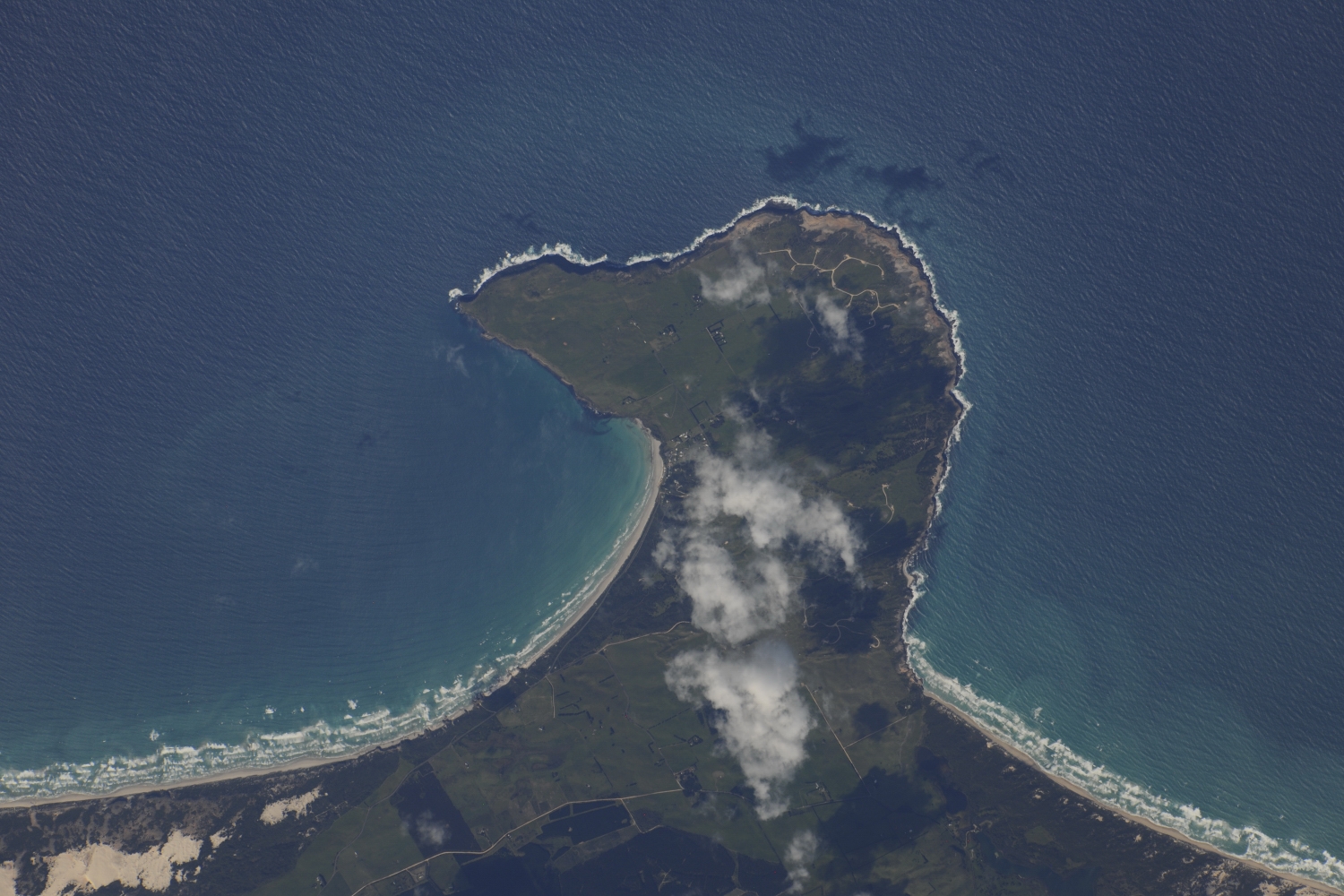
@Astro_wheels is his name and tweeting from space is his game!
Flight Engineer Douglas H. Wheelcock has spent the last six months of his NASA journey 'tweet'ing pictures of the earth from space. His Twitter ID is @Astro_wheels and with over 53,000 followers, his pictures are viewed around the globe. Ironic really. He often posts pictures of obscure locations or stunning views and his dedicated following guess which part of the world he has been looking at!
Below are a few of his recent tweets but check him out for yourself.
Doug Wheelock tweets pictures of the earth from an orbiting laboratory in space every day, what do you do?



Monday, 8 November 2010
Microwaving CDs...don't try this at home!
I have added procrastination to the list of skills I've mastered and, in a bid to impart this wisdom to my faithful readers, I am going to share with you what I've been doing this cold and drizzly Monday evening.
 Today's post is about microwaving CDs but please, please, please do not try this at home (or do, but absolutely, definitely DO NOT hold me responsible. Not even a little bit. Nada)
 Today's post is about microwaving CDs but please, please, please do not try this at home (or do, but absolutely, definitely DO NOT hold me responsible. Not even a little bit. Nada)
When you put a CD in the microwave for a few seconds (this is not a recipe...but no more than three seconds) the aluminium concentric circles are vaporised and you are left with this nifty little piece of art (right).
If you were to put a CD in the microwave, you would make sure that it was stood up against a glass and that you stopped the microwave when the CD started smoking. Of course you know those fumes are very dangerous and shouldn't be inhaled. But you won't try this at home so it doesn't matter.
The few seconds of arcs being created around the CD makes for a miniature electrical storm sparking away in your microwave (or your neighbours' if your flatmates are odd and don't own one).
You can watch this video at Powerlabs showing you what it looks like since you aren't going to do this at home.
You can watch this video at Powerlabs showing you what it looks like since you aren't going to do this at home.
When the little lightning party ends, one must be careful not to touch the CD right away (not You, no one's accusing You). The CD can still be conducting currents for a few seconds after microwaves are present.
'How the heck does it work?', you may be wondering. Well, the thin layer of aliminium is vaporised by the microwaves and this vapour supports the flow of electricity. With me so far? Okay, well arcs form (like those from clouds to the ground - lightning), which continue to vaporise a trail along the circular tracks where data is stored. This happens until the space between the tracks becomes too great to support an arc.
...and what you are left with is seen below. This is not one I did, my attempt (in safe laboratory conditions with all safety precautions taken) was pretty special but I couldn't get a decent photograph with my camera!
 |
| Arianna Gianola, Princeton University gave it a good shot |
So, the moral of the story is; if you're bored and have CDs from the 80s kicking around the house don't put them in the microwave*.
*Unless you have a very well ventilated room, only put it in for 3 seconds, don't mind the prospect of your microwave exploding, wait very patiently once it's finished and take amazing pictures to share with me afterwards. Then and ONLY THEN may you try this at home
Subscribe to:
Posts (Atom)