 |
| (Credit: NASA; ESA; G. Illingworth, D. Magee, and P. Oesch, University of California, Santa Cruz; R. Bouwens, Leiden University; and the HUDF09 Team) |

Showing posts with label astronomy. Show all posts
Showing posts with label astronomy. Show all posts
Friday, 12 July 2013
10 years to take a picture of the universe
This is a compiled image of 10 years worth of NASA Hubble Space Telescope photographs. NASA call this the eXtreme Deep Field (XDF) which is a section of sky at the center of the original Hubble Ultra Deep Field (previous holder of the title 'deepest image of the universe') and contains 5,500 galaxies even within its smaller field of view. The faintest galaxies you can see on the picture are one ten-billionth the brightness of what the human eye can see. You can go into more detail and watch a video on the NASA website.

Friday, 15 March 2013
The most beautiful sight in space is urine
From down here on our humble planet, the best sight for me is the Milky Way on a clear night in a remote location. Or a meteor shower. Or a Solar Eclipse. Or Uranus, Venus and Mars all visible with the naked eye on the same night. But for Russel Schweickart of Appolo 9...
Um. Awkard. So, could you explain yourself please Russel?
Russel wasn't available for comment but I can regurgitate what others have said for you. Space shuttles don't have much space on board for the little extras, like bodily waste, so they regularly have to release them to lighten their load. When urine is released from the exit nozzle it freezes immediately and 'instantly flashes into 10 million little ice crystals which go out almost in a hemisphere…a spray of sparklers, almost' (say Scientific American anyway). And it gets better, once those little droplets are crystals, the sun then hits them and transforms them into water vapour to create a kind of mesmerizing cloud of human bodily fluids.
The urine dump that Russel was talking about was a particularly big one (about 68 kilos of urine and water) because the shuttle couldn't unload during it's 10-day stay at the international Space Station. Nice.
*Source: Time
"The most beautiful sight in orbit…is a urine dump at sunset"*
Um. Awkard. So, could you explain yourself please Russel?
Russel wasn't available for comment but I can regurgitate what others have said for you. Space shuttles don't have much space on board for the little extras, like bodily waste, so they regularly have to release them to lighten their load. When urine is released from the exit nozzle it freezes immediately and 'instantly flashes into 10 million little ice crystals which go out almost in a hemisphere…a spray of sparklers, almost' (say Scientific American anyway). And it gets better, once those little droplets are crystals, the sun then hits them and transforms them into water vapour to create a kind of mesmerizing cloud of human bodily fluids.
The urine dump that Russel was talking about was a particularly big one (about 68 kilos of urine and water) because the shuttle couldn't unload during it's 10-day stay at the international Space Station. Nice.
*Source: Time
Saturday, 11 February 2012
The Sky at Night on BBC
I have just finished watching the Sky at Night on BBC, admiring all the stunning cosmic photographs on display, so decided to check out their Flickr page. It's a good collection of amateur and professional photography, with a particularly large selection of picture of the moon with good views of the lunar mare. Check out The Sky at Night Flickr group.

Thursday, 4 August 2011
Another beautiful nebula from NASA

Another post from NASA's Astronomy Picture of the Day that made me sit for a second and absorb the universe's awesomeness in all it's dutsy, ripped-from-a-sci-fi-movie glory.
Sometimes called the Iris Nebula, due to its porpensity to evoke floral imagery, these clouds of interstellar dust and gas have "blossomed 1,300 light-years away in the fertile star fields of the constellation Cepheus".
Sunday, 3 July 2011
Hold the world in the palm of your hand
I have spent the last half hour in awe at the wares for sale on the website of Bathsheba Grossman who produces 3D laser sculptures in glass paperweights. The weights are inspired by astronomy, maths and science in general. The detail is amazing and they look pretty awesome too.
 |
| The Star Map Crystal - A map of our nearby stars covering 5 parsecs (1 parsec=3.086 x 10¹⁶km) in all directions, with sol at the center. The map comes with a key describing each star and symbol. |
 |
| Earth's Magnetic Field (looking perpendicular to the equator) |
 |
| Earth's Magnetic Field (from the top) |
The Geodynamo: Earth's magnetic field has existed for billions of years, yet the planet is not a permanent magnet: the field would vanish in just 100,000 years if it weren't being regenerated from thermal convection of liquid iron in the earth's core.
In 1995 Gary Glatzmaier (UCSC) and Paul Roberts (UCLA) created the first self-consistent time-dependent simulation of this process in 3D. Their model works: it predicts the poles and the dynamic interior, as well as the occasional global polarity flip.
 |
| Sloan Digital Sky Survey |
This Sloan Digital Sky Survey was performed by a 2.5m telescope, located in New Mexico, from 2000 to 2008, covering a solid slice of the the northern-hemisphere sky plus three delicate tranches of the southern.
Our viewpoint is at the center, where the northern- and southern-hemisphere data come together. The features revealed at this scale are composed mainly of the brightest objects; the survey contains more than 930,000 galaxies and more than 120,000 quasars.
And to finish, our own home, sweet, home:
 |
| Our Milky Way |
Friday, 15 April 2011
Spiral nebula
 |
| Messier 101 Hubble Legacy Archive, ESA, NASA; Processing and additional imaging - Robert Gendler |
There's no denying it - galaxies are beautiful. M101, also know as the Pinwheel Galaxy, is a particularly sexy set of spiral arms and is 170,000 light-years across (twice the size of our own humble milky way).
The red marbling comes from hydrogen gas and occurs in areas where new stars are formed. The white and blue lights are stars and dust and, behind them, background light and galaxies.
M101 is in the constellation Ursa Major, know to me as a child as the Big Dipper or the Plough which can be seen through most of the year in the northern hemisphere.
Mostly though, it's pretty.
Tuesday, 16 November 2010
A view from the outside
@Astro_wheels is his name and tweeting from space is his game!
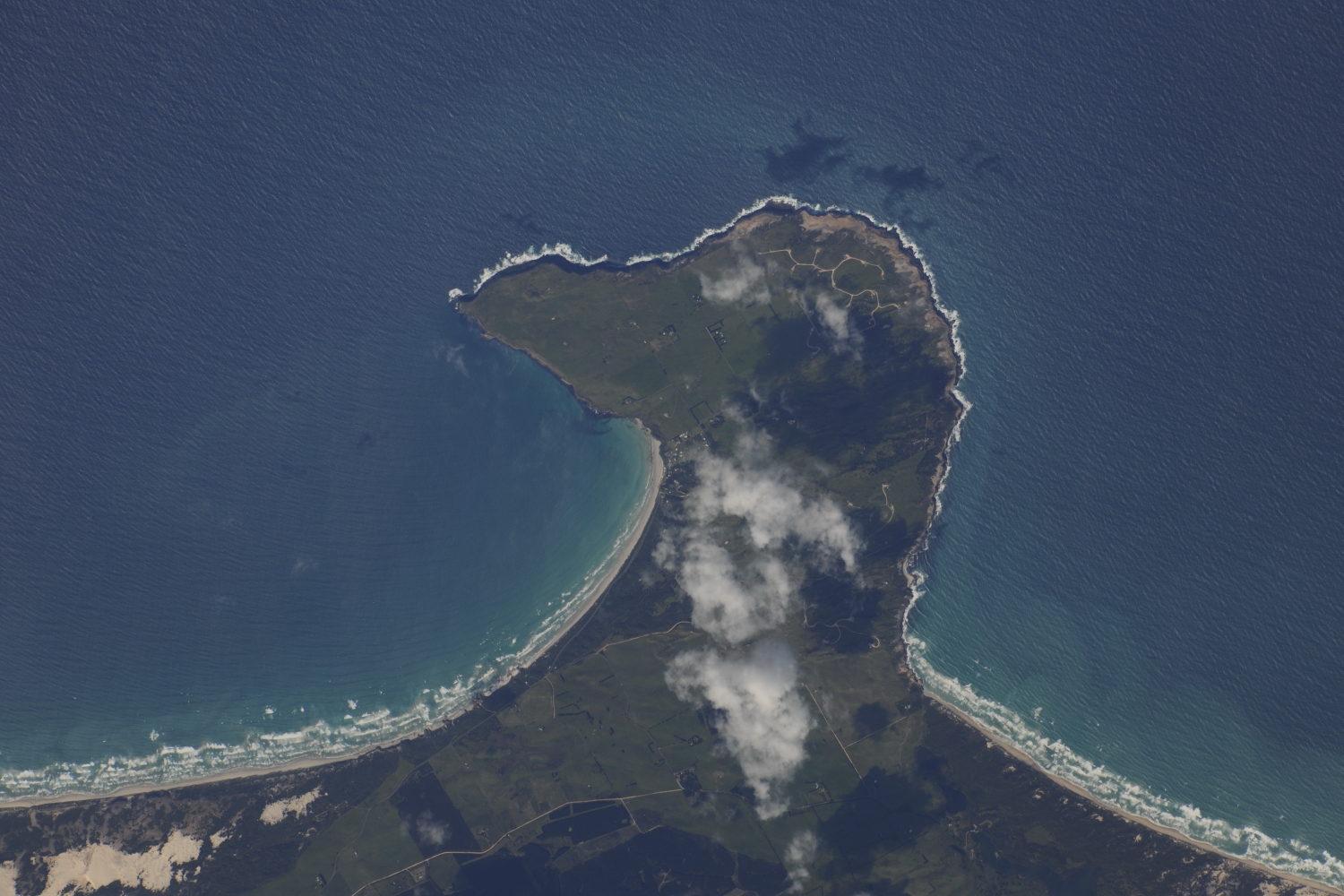
Flight Engineer Douglas H. Wheelcock has spent the last six months of his NASA journey 'tweet'ing pictures of the earth from space. His Twitter ID is @Astro_wheels and with over 53,000 followers, his pictures are viewed around the globe. Ironic really. He often posts pictures of obscure locations or stunning views and his dedicated following guess which part of the world he has been looking at!
Below are a few of his recent tweets but check him out for yourself.
Doug Wheelock tweets pictures of the earth from an orbiting laboratory in space every day, what do you do?


Flight Engineer Douglas H. Wheelcock has spent the last six months of his NASA journey 'tweet'ing pictures of the earth from space. His Twitter ID is @Astro_wheels and with over 53,000 followers, his pictures are viewed around the globe. Ironic really. He often posts pictures of obscure locations or stunning views and his dedicated following guess which part of the world he has been looking at!
Below are a few of his recent tweets but check him out for yourself.
Doug Wheelock tweets pictures of the earth from an orbiting laboratory in space every day, what do you do?



Monday, 28 June 2010
Aurora Borealis - Nature's light display

One of the most beautiful spectacles in our skies, the Northern and Southern lights are seen at night in polar regions, and appear as a green or redish hue along the horizon or as arcs of colour curling across the sky. The Southern Lights (Aurora Australis) are less photographed and reported due to there being fewer vantage points in the optimum 23 degree circle surrounding each magnetic pole where the lights are brighter and more frequent.

Fairbanks, Alaska by Mila Zinkova

The green and brownish red light comes from oxygen light emissions and the blue or deep red come from nitrogen. Together creating great curtains of colour across the sky in hotspots along the northern hemisphere, from Norway to Alaska and Sweden to Greenland.

Aurora Borealis from space
It is unsurprising the the Aurora Borealis inspire artists the world over, adorning walls as oil on canvas or prints of sci-fi-esque posters.


The Crosscountry Skier, Oliver Ævar Guðbrandsson
However, the truth of it is that there is nothing greater than this, Mother Nature's own own handicraft, the aurorae's own beautiful existence, which far exceeds any of man's interpretive efforts.
Sunday, 30 May 2010
The Art in Science
Art is a lie that makes us realize the truth
Pablo Picasso
Pablo Picasso
There are hundreds of types of art; classical greek art, indian art, aborigine art, abstract art, impressionism, expressionism, realism, dadaism and a whole string of other -isms. Traditionally, as a culture, we teach our young to make the choice: Shakespeare or DNA, Rembrandt or fractional distillation, a Ming Dynasty vase or Einstein's Theory of Relativity. So claiming any kind of Art in Science seems like an oxymoron, doesn't it? But this seems to me a false dichotomy. Though one is the quest for truth and explanation and one the expression of individuality, artists have often chosen to take inspiration from scientific principles and have also unknowingly created structures present in science and nature: Be it music's fascination with mathematical patterns and beat; Rudolf Laban's choreography drawn from principles of geometry as the limbs trace lines along fundamental geometric shapes, or the way the pre-frontal cortical areas of the brain are titillated as you appreciate the aesthetics and respond emotionally to a classic Van Gogh; art and science are inexorably intertwined. Deal with it.
Science and writing, particularly, have a lot in common; the need for fresh ideas and attention to detail, a constant questioning and redeveloping of ideas and creating a complete understanding through commitment to a chosen route. I am interested in poetry and creating an understanding or questioning through creative expression, to take a step back from the raw details and mould it into something tangible and expressive. There is so much beauty in nature, I hope that, however naively, I can recreate and represent the fundamental, exquisite details of nature and science by sharing with you other peoples sci-art collaborations.
Welcome to the beautiful world of Science.
Subscribe to:
Posts (Atom)